
Warehouse to Distribution Center
Move inventory between storage and distribution points to support replenishment, allocation, and ongoing operations.
Box Truck Team moves freight between the commercial nodes in your supply chain using capable 26-foot box trucks, experienced drivers, and technology-informed planning.
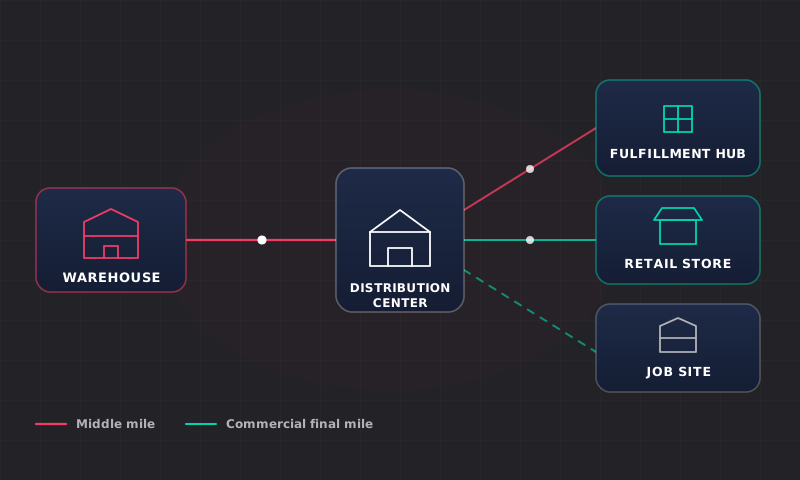
The middle mile connects the places where freight is received, stored, sorted, redistributed, and prepared for its next destination. When that movement falls behind, downstream schedules, store inventory, fulfillment performance, and customer commitments can fall behind with it.
We provide right-sized box truck capacity for facility-to-facility freight that needs disciplined coordination without the footprint of a full tractor-trailer.
Common Middle-Mile Movements
Move inventory between storage and distribution points to support replenishment, allocation, and ongoing operations.
Deliver consolidated freight to retail, commercial, institutional, or operating locations according to their receiving requirements.
Transfer palletized or consolidated freight between fulfillment and downstream delivery facilities to keep the next stage of the network supplied.
Support inventory balancing, stock relocation, overflow management, returns, and operational transfers between approved commercial sites.
Our 26-foot box trucks can support a broad range of properly packaged and secured general freight.
Every shipment is evaluated for weight, dimensions, load distribution, handling needs, and facility access before dispatch.
With approximately 1,700+ cubic feet of cargo space and up to 10,000 pounds of payload capacity, our 26-foot trucks are well suited to consolidated freight and shorter commercial lanes. Their maneuverability also makes them practical for urban facilities, tight yards, smaller receiving areas, and destinations where a full trailer may be inefficient.
Hydraulic liftgates extend that flexibility to approved locations where dock-level unloading is unavailable.
Non-refrigerated general freight only. Exact capacity depends on the truck, freight dimensions, weight distribution, route, and applicable operating requirements.
Planned Around the Entire Move
We confirm the freight profile, origin, destination, required timing, handling needs, and facility instructions.
Our team verifies box truck suitability and uses available data to plan an efficient, workable route.
Appointment windows, receiving contacts, access restrictions, and loading or unloading requirements are incorporated into the transportation plan.
We close the loop with the agreed delivery documentation and communicate exceptions that affect the shipment.
Why BTT
Box Truck Team is a growing carrier led by transportation professionals who understand the realities behind a scheduled route: facility congestion, appointment changes, load securement, access restrictions, and the importance of accurate communication.
We combine that practical experience with focused equipment and modern planning tools to provide a more accountable middle-mile service.
Middle-mile transportation moves freight between commercial points in a supply chain, such as warehouses, fulfillment centers, distribution hubs, terminals, stores, and local delivery stations. It connects the facilities where freight is stored, sorted, transferred, or prepared for final delivery.
Middle mile generally involves consolidated or palletized freight moving between commercial facilities. Final mile completes the journey from a warehouse or terminal to the shipment’s business, retail, job-site, or residential destination.
Our box trucks are suited to palletized goods, retail inventory, packaged products, commercial supplies, equipment, and other non-refrigerated general freight. Each shipment is reviewed for its dimensions, weight, handling requirements, and facility access before scheduling.
We support transportation between warehouses, distribution centers, fulfillment facilities, cross-docks, retail locations, offices, commercial buildings, and other approved business destinations. Pickup and delivery requirements are confirmed in advance to help prevent access or receiving delays.
Yes. Middle-mile service can support recurring transportation lanes as well as individual or on-demand freight movements. Recurring needs may be better served through a dedicated-route arrangement, while individual shipments can be scheduled according to available capacity.
We collect the applicable appointment times, receiving instructions, contact information, and access requirements before dispatch. Our team coordinates those details with the driver and communicates changes or exceptions that could affect the delivery schedule.
Delivery confirmation may include arrival information, signed proof of delivery, bills of lading, photographs, or other documentation required for the shipment. Any special documentation requirements should be provided when the transportation is scheduled.
Share your shipment, lane, or recurring middle-mile requirements with our team.